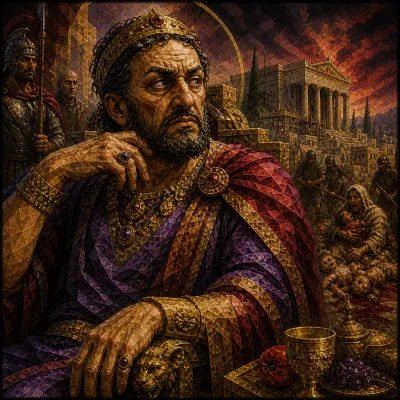
Herod the Great
King of Judea
Herod the Great was the Roman-appointed King of Judea from 37 BC to 4 BC. Known for his massive building projects including the expansion of the Second Temple, he was also infamous for his paranoia and cruelty. When the Magi came seeking the newborn King of the Jews, Herod ordered the massacre of all male children in Bethlehem under two years old, attempting to eliminate the prophesied Messiah.
Character Traits
Life Timeline
Herod is appointed King of Judea by the Roman Senate with support from Mark Antony and Octavian. He conquers Jerusalem and begins his reign, establishing himself as a client king under Roman authority. His rule marks the beginning of the Herodian dynasty in Palestine.
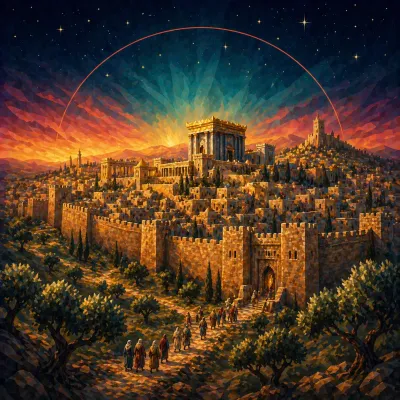
MAT 2:1Herod begins the massive renovation and expansion of the Second Temple in Jerusalem, transforming it into one of the most magnificent structures of the ancient world. This project takes decades to complete and is intended to gain favor with his Jewish subjects while demonstrating his power and wealth.
JHN 2:20Wise men from the East arrive in Jerusalem seeking the newborn King of the Jews, deeply troubling Herod who sees this as a threat to his throne. He secretly meets with the Magi and asks them to report back about the child's location, claiming he also wants to worship the new king but actually planning to eliminate this potential rival.
MAT 2:1-8When the Magi do not return as promised, Herod becomes furious and orders the execution of all male children two years old and under in Bethlehem and its vicinity. This brutal act, known as the Massacre of the Innocents, demonstrates his paranoid determination to eliminate any perceived threat to his rule, fulfilling Jeremiah's prophecy about Rachel weeping for her children.
MAT 2:16-18Herod's paranoia extends to his own family, leading him to execute his wife Mariamne and several of his sons whom he suspects of plotting against him. His reign of terror affects even his closest relatives, as he becomes increasingly unstable and suspicious of everyone around him.
MAT 2:16Herod dies in Jericho after a prolonged and painful illness, described by historians as involving severe pain, fever, and other debilitating symptoms. His death allows Joseph to safely return with Mary and Jesus from Egypt to the land of Israel, as the one who sought to kill the child is now dead.
MAT 2:19-20Key Relationships
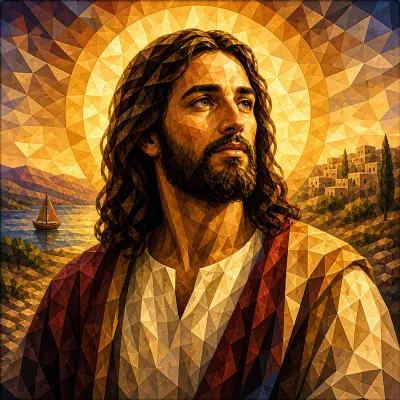
Herod saw the infant Jesus as a threat to his throne and attempted to kill him, leading to the Holy Family's flight to Egypt
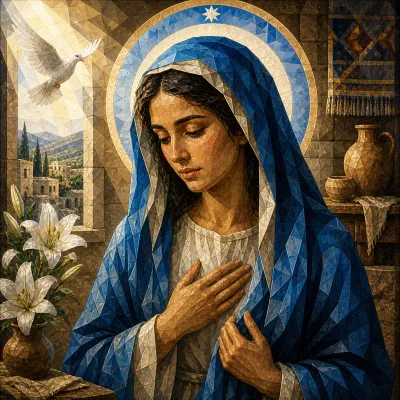
Mary was forced to flee to Egypt with her family to escape Herod's murderous intentions toward her son

John the Baptist was born during Herod's reign, and his father Zechariah served in the temple that Herod renovated
Key Locations

Spiritual Lessons
The Futility of Fighting God's Plan
Herod's attempt to thwart God's plan by killing Jesus demonstrates the futility of human opposition to divine purposes. Despite his power and brutality, God's plan for salvation through Christ could not be stopped, showing that earthly authority is ultimately subject to heavenly authority.
The Corruption of Unchecked Power
Herod's reign illustrates how absolute power corrupts absolutely, leading to paranoia, cruelty, and the destruction of innocent life. His fear of losing power drove him to increasingly desperate and evil acts, warning us about the dangers of prioritizing worldly authority over moral principles.
God's Protection of His People
Even in the face of Herod's murderous plot, God protected Jesus through divine warning and guidance to Joseph. This shows that God watches over His people and can use various means, including dreams and circumstances, to preserve those He has called for His purposes.